Have you recently heard about ABA therapy but aren’t quite sure what it involves or how it could help your child? Maybe your child has been diagnosed with autism or ADHD, or you’re noticing difficulties with communication, routines, or behavior. If you’re searching for a proven, structured way to support their growth, ABA interventions may be exactly what you need.
Applied Behavior Analysis (ABA) is a scientific and highly personalized approach to understanding and improving behavior. It focuses on how learning happens, how behavior is shaped by the environment, and how we can teach essential skills through positive reinforcement and consistent strategies. ABA interventions are tailored to each child’s needs and guided by real data to ensure meaningful, lasting progress.
In this article, we’ll break down what ABA interventions really are, how they work, the different methods used in therapy, and what parents can expect when starting with ABA. Whether you’re just beginning to explore options or looking to deepen your understanding, this guide will give you the clarity and confidence to take the next step.
How ABA Interventions Work
ABA interventions begin with a comprehensive and systematic evaluation of the child’s behavior. This process is led by a Board Certified Behavior Analyst (BCBA), who gathers detailed information through direct observation, interviews with parents or caregivers, and standardized behavior assessment tools. The goal is to understand not just what the child is doing, but why. For example, a child may throw objects during transitions, and through the assessment, the BCBA may identify that the behavior occurs when the child is asked to stop a preferred activity. This is known as a functional behavior assessment, and it is the foundation for developing an effective and personalized treatment plan.
Once the assessment is complete, the BCBA identifies specific behaviors to target for change. These behaviors are categorized into two groups: those that need to be reduced, such as screaming, physical aggression, or self-injury, and those that need to be strengthened, such as using appropriate communication, waiting patiently, or following a one-step instruction. Each behavior is defined in objective, observable terms so that progress can be tracked accurately. Goals are then broken down into small, manageable steps to help the child experience success consistently. For instance, if a goal is to increase independent tooth brushing, the process might begin with learning to pick up the toothbrush and gradually build toward completing the full routine.
A key principle in ABA is the use of positive reinforcement to encourage and strengthen desired behaviors. Instead of focusing on punishment, ABA relies on rewards that are meaningful to the child, such as verbal praise, access to a favorite toy, or a token that leads to a larger reward. These reinforcers are used immediately after a desired behavior to increase the likelihood it will occur again. Throughout the intervention, therapists collect data during each session to monitor progress and identify trends. If a child is not progressing as expected, the BCBA uses that data to make timely adjustments to the plan. This continuous, data-informed approach ensures that the intervention remains effective and tailored to the child’s changing needs.
Common Types of ABA Interventions
ABA therapy includes a variety of intervention strategies that are chosen based on the child’s needs, goals, and learning style. These strategies can be used alone or in combination to help children build communication, social, academic, and self-care skills. Understanding the different types of ABA interventions gives families insight into how therapy sessions are structured and why certain methods are used.
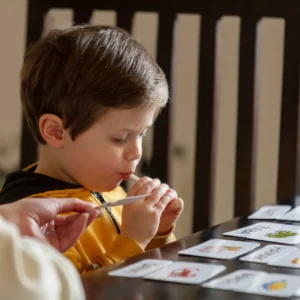
One of the most structured and widely used techniques is Discrete Trial Training (DTT). This method breaks down complex skills into small, manageable parts that are taught one at a time. Each trial includes a specific instruction, the child’s response, and immediate feedback. For example, if a therapist is teaching color identification, they might present a red block and ask, “What color is this?” When the child responds correctly, they receive praise or a tangible reward. Repetition and consistency are key in DTT, which helps the child build mastery through clearly defined teaching steps.
In contrast, Natural Environment Teaching (NET) is more flexible and takes advantage of everyday situations to teach functional skills. Instead of sitting at a table, the child learns through play, conversation, and daily routines. For instance, during snack time, a child might learn to request “more juice” or “cracker, please.” Because these interactions happen in the child’s natural setting, skills are more likely to carry over into real-life situations. NET is especially effective for generalization, helping the child apply what they’ve learned in a variety of settings with different people.
Another effective intervention is Pivotal Response Treatment (PRT), which targets core areas of development such as motivation, self-initiation, and responsiveness to social cues. Rather than focusing on specific behaviors, PRT helps children become more engaged learners overall. For example, a child might be encouraged to make choices during play or initiate conversation with a therapist, building confidence and communication skills in the process. Additional tools such as token economy systems and task analysis provide structure for teaching independence. A child may earn tokens for completing each step of a routine, like getting dressed, which can later be exchanged for a preferred activity. Similarly, task analysis breaks down multi-step activities like brushing teeth or packing a backpack into visual or verbal sequences that the child can follow and learn step by step.
ABA Interventions by Setting
ABA therapy is highly adaptable and can be delivered across different environments to meet the needs of each child and family. The setting in which therapy takes place plays a key role in how well skills are learned, retained, and used in daily life. Whether therapy is provided at home, at school, or through the community or telehealth, each setting offers unique advantages and addresses specific challenges faced by families.
In-home ABA therapy allows children to learn and practice skills in the environment where they feel most secure and comfortable. This is especially helpful for young children or those who struggle with transitions. Therapists can work on behaviors that happen during common family routines, such as bedtime, mealtime, or getting ready for school. For example, a therapist might help a child learn to follow a morning checklist or reduce tantrums during clean-up time. Parents benefit as well by observing techniques in action, gaining confidence in how to support their child between sessions. This collaboration strengthens consistency and helps families feel more empowered in their role.
School-based ABA support is ideal for children who need help adapting to structured group environments. In a classroom, a therapist can address specific goals such as staying seated during instruction, taking turns during activities, or following directions during transitions. This type of support is essential for children who experience difficulties with peer interaction, impulsivity, or academic engagement. For students with an Individualized Education Program (IEP), ABA strategies can be integrated directly into their educational goals. Working alongside teachers, therapists ensure that progress is monitored and reinforced throughout the school day, creating a more cohesive and supportive learning experience.
Community-based and telehealth ABA offer flexible alternatives for families facing time, location, or transportation barriers. In community settings, therapy sessions focus on real-world skills like waiting in line at a grocery store, ordering food at a restaurant, or playing safely at a park. These situations often present challenges for children with behavioral difficulties, and practicing in the moment helps bridge the gap between therapy and real life. Telehealth ABA is a practical option for families in rural areas or with busy schedules. It enables ongoing access to expert support, including parent coaching, direct therapy, and behavior consultations, all from the comfort of home. Regardless of the setting, the goal remains the same: to help children generalize what they learn and use those skills confidently across different places, situations, and people.
Goals of ABA Intervention Programs
One of the primary goals of ABA therapy is to reduce behaviors that interfere with a child’s ability to learn, connect with others, or participate in daily routines. These behaviors can include aggression, self-injury, frequent tantrums, or elopement, which is when a child runs away from safe areas. Rather than focusing solely on eliminating these behaviors, ABA identifies the reason behind them such as frustration, sensory overload, or difficulty communicating and teaches the child safer, more functional alternatives. For example, instead of throwing objects when overwhelmed, a child might learn to request a break using words, pictures, or gestures.
Equally important is the development of essential skills that allow the child to communicate, socialize, and participate more fully in their environment. ABA programs often begin with foundational skills like making eye contact, following simple instructions, or asking for help. Over time, as the child builds confidence and consistency, therapy expands to include more advanced abilities such as holding conversations, solving conflicts, or working cooperatively with others. These skills not only support better relationships with peers, teachers, and caregivers, but also prepare the child for success in school and community settings.
Another core objective of ABA is to increase independence in everyday tasks. Children may work on dressing themselves, brushing their teeth, packing a backpack, or completing age-appropriate chores. Therapists use a combination of visual prompts, step-by-step guidance, and positive reinforcement to gradually help the child take ownership of these responsibilities. Progress is closely monitored through ongoing data collection, and goals are regularly updated to reflect the child’s growth and emerging needs. This personalized and outcome-driven approach ensures that the therapy remains relevant, practical, and meaningful throughout the child’s development.
Final Thoughts: Why ABA Interventions Work
ABA interventions are more than just strategies, they are a powerful framework for helping children gain the skills they need to thrive. By using evidence-based techniques and real-time data to guide each session, ABA delivers measurable results. From reducing meltdowns to building language or increasing self-sufficiency, the changes that come from consistent ABA therapy can be life-changing for the child and the entire family.
What makes ABA truly effective is its individualized care. No two children learn the same way, and ABA recognizes that. Programs are custom-built around each child’s abilities, goals, environment, and challenges. Whether your child is just starting their developmental journey or already receiving services, ABA can adapt to meet them where they are and help them reach new milestones.
At Nexo ABA Therapy, we’re here to support your family every step of the way. Our expert team creates personalized plans backed by data, compassion, and proven outcomes. If you’re ready to explore how ABA interventions can benefit your child, contact us today to schedule a consultation and start building a stronger future.