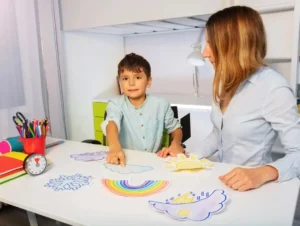
Pathological Demand Avoidance (PDA) is a behavioral profile that falls within the autism spectrum and is marked by an intense avoidance of everyday demands or expectations. Although it is not formally recognized as a clinical diagnosis in manuals like the DSM-5, PDA has been widely acknowledged by professionals, especially in the United Kingdom, thanks to the groundbreaking work of psychologist Elizabeth Newson in the 1980s. She identified a unique behavioral pattern in some autistic children who exhibited high anxiety when faced with demands and showed a strong need for control.
Unlike other autism profiles, individuals with PDA may appear socially capable in some settings, but beneath the surface, they often feel overwhelmed, anxious, or threatened by any type of demand, even those that come from routine or gentle requests.
At Nexo ABA Therapy, we work with many families seeking answers to behaviors that don’t fully align with more typical presentations of autism. In Florida, where more families are gaining access to early evaluations and specialized services, understanding the PDA profile can make a meaningful difference.
Children with PDA often don’t respond well to traditional methods of discipline, rigid structure, or reward systems. They are frequently misunderstood as “defiant” or “manipulative,” which can lead to frustration at home and in school. Recognizing PDA-like traits allows caregivers and professionals to shift the approach—focusing on strategies rooted in understanding, flexibility, and respect for a child’s emotional needs.
This guide will walk you through what PDA is, how to recognize it, how it relates to autism, and how families in Florida can find the right kind of support.
Is PDA a Recognized Diagnosis?
One of the most common questions we hear at Nexo ABA Therapy is whether PDA is an official diagnosis under the autism spectrum. While the answer isn’t entirely straightforward, it’s important to understand the context. At this time, Pathological Demand Avoidance is not formally listed as a separate diagnosis in major medical classification systems such as the DSM-5 (Diagnostic and Statistical Manual of Mental Disorders) or the ICD-11 (International Classification of Diseases).
However, that doesn’t mean PDA should be dismissed or ignored. It simply means that it hasn’t yet been classified as a standalone diagnosis within U.S. psychiatry.
Across the country, and especially here in Florida, more and more psychologists, developmental therapists, and mental health professionals are acknowledging PDA as a behavioral presentation within the autism spectrum. While they may not label it as “PDA” in a diagnostic report, they can still identify traits that align with the profile, which can lead to more effective support, especially when traditional strategies are not working.
Common Signs and Traits of PDA
The PDA profile presents a unique set of behaviors that can be difficult to identify without proper context. One of the most prominent features is extreme resistance to everyday demands—even ones that seem minor or reasonable, like getting dressed, eating a meal, or following a simple routine.
Importantly, this resistance is not about being rebellious or lacking discipline,it’s often rooted in anxiety. Children with PDA-like traits may perceive any kind of demand as a threat to their sense of control, and will go to great lengths to avoid it.
They often use complex social strategies to sidestep demands, such as changing the subject, joking, creating excuses, or distracting the person making the request. These responses can seem clever or even humorous, which sometimes causes caregivers or teachers to misread the behavior.
Additional common traits include:
- Superficial sociability, where a child may appear socially skilled but is often trying to maintain control in interactions.
- Sudden mood changes that may seem unpredictable or intense.
- Advanced pretend play or role-play as a form of escape (“I’m the teacher now, so you can’t tell me what to do.”)
- Obsessive social interests, such as trying to control group dynamics or becoming intensely focused on one individual.
Recognizing these behaviors as coping mechanisms, rather than disobedience, can be a powerful shift for families.
PDA and Autism: Connection or Subtype?
For years, there was debate about whether PDA was a separate condition, a co-occurring challenge, or simply part of the autism spectrum. Today, most researchers and clinicians agree that PDA is a profile within autism, not a diagnosis in itself. In fact, many children with PDA traits also meet full diagnostic criteria for autism, though their behavior and reactions to everyday situations can look very different.
PDA is often overlapping with other traits, such as those associated with ADHD, emotional sensitivity, or behavior that appears oppositional—but is really a reflection of internal distress. This can make identification more complicated, as these children may be misdiagnosed or misunderstood.
Fortunately, research into PDA is growing. Some studies suggest that as many as 20% of autistic children may show characteristics associated with PDA at some stage, though clinical definitions and boundaries are still evolving.
What is clear, however, is that intervention approaches need to be adapted. Strategies that work well for many autistic children such as rigid routines, reward charts, or firm behavioral expectations, can often backfire with a child who fits the PDA profile, increasing stress, avoidance, and conflict.
At Nexo ABA Therapy, we believe that understanding each child’s individual profile is essential. When we view behavior through a lens of compassion and curiosity, we can build truly supportive, effective paths forward.
Supporting Children with PDA-Like Traits
Although Pathological Demand Avoidance is not a formal diagnosis in the United States, many families and professionals recognize behavioral patterns that fit this profile. These are often children who display a high need for control, intense anxiety in response to everyday expectations, and strong emotional or social avoidance behaviors.
While there’s no official treatment protocol for PDA, what has proven helpful is adapting how adults interact with the child—at home, in school, and in therapeutic settings. The following strategies are designed to create safer, less demanding environments for children who demonstrate these traits.
At Home: Less Pressure, More Connection
Many families find relief in adopting elements of what’s known as “low demand parenting”. This approach involves reducing everyday pressures to prevent emotional overload, especially during times of stress.
Instead of focusing on strict compliance with rules or routines, caregivers are encouraged to offer choices, prepare the child for transitions, validate feelings, and create an atmosphere of emotional safety. Co-regulation—calming with the child, rather than demanding they calm down alone—is a cornerstone of this approach.
This doesn’t mean letting go of boundaries altogether, but rather presenting them with empathy and flexibility. Over time, many children who previously resisted demands may begin to engage more openly when they feel their autonomy is respected.
In School: Adapting to Reduce Overwhelm
School can be a major source of anxiety for children with PDA-like traits, especially in environments with rigid schedules or unpredictable expectations. That’s why strong collaboration between families and schools is essential.
Helpful accommodations may include:
- Visual schedules that help the child anticipate the flow of the day.
- Sensory tools (such as noise-canceling headphones or calming spaces) to manage overstimulation.
- Flexible academic expectations, such as offering different ways to complete tasks, extended time, or alternatives to oral presentations.
In Florida, educational support plans like the IEP or 504 Plan allow schools to formalize and implement these kinds of accommodations. What matters most is that both educators and families approach these needs with empathy—not punishment—and a shared understanding of the emotional roots of the behavior.
Therapeutic Support: Relationship First
When supporting children who avoid demands, it’s essential to choose therapeutic models that prioritize trust, emotional regulation, and connection. Traditional methods that focus heavily on compliance may unintentionally create more resistance and feelings of insecurity.
In contrast, collaborative, child-centered approaches have shown promise in reducing anxiety and supporting emotional development. These may include:
- Therapies focused on sensory and emotional regulation.
- Relationship-based models, such as DIR/Floortime or the Hanen approach, where connection is the foundation for growth.
- Adapted Cognitive Behavioral Therapy (CBT) that teaches children to recognize anxious thoughts, explore alternatives, and build more flexible responses.
At Nexo ABA Therapy, we understand that every child is different. Our approach combines the evidence-based principles of Applied Behavior Analysis (ABA) with deep respect for individual differences. We do not use rigid, one-size-fits-all programs, instead, we create personalized, compassionate care plans that prioritize emotional well-being, autonomy, and long-term development, especially when PDA-like patterns are present.
Conclusion
Raising or caring for a child who reacts intensely to everyday demands can be exhausting, confusing, and sometimes isolating. But it can also open the door to new forms of understanding, communication, and meaningful connection.
When families begin to look beyond surface behavior, they often discover that what seems like “noncompliance” is actually a valid way of seeking safety, regulating emotion, or trying to feel in control in a world that can be overwhelming.
At Nexo ABA Therapy, we walk alongside families on this journey of discovery. We don’t offer quick fixes, but we do offer insight, tools, and compassionate support. Understanding what’s behind a behavior is just the beginning. From there, we work together to build new ways forward.
If anything in this article resonated with you or your family’s experience, know that you’re not alone and we’re here to help you take the next step.