Navigating social situations can be challenging for many children, especially those on the autism spectrum. As a parent or caregiver, you might have noticed your child struggling to initiate conversations, connect with peers, or interpret nonverbal cues. These moments can raise questions, concerns, and sometimes even a sense of uncertainty about how to best support your child’s growth.
At Nexo ABA Therapy, we understand that every child is unique—and so is their path toward building meaningful social connections. In this article, we’ll explore how Applied Behavior Analysis (ABA) therapy can support the development of essential social skills in autistic children. You’ll learn about the specific challenges many families face, the techniques we use to foster communication and interaction, and how small, consistent steps can lead to lasting progress.
Whether you’re just beginning to explore therapeutic options or looking for more effective strategies, this guide will offer insight, clarity, and hope. Our goal is to walk this journey with you—compassionately, professionally, and with your child’s well-being at the center of everything we do.
Understanding Social Challenges in Autism
For many children on the autism spectrum, social interaction doesn’t come naturally—it must be taught, practiced, and supported over time. Unlike their neurotypical peers, these children often face unique difficulties when it comes to interpreting facial expressions, understanding tone of voice, or recognizing personal space. As a result, forming friendships or participating in group activities can feel overwhelming or confusing.
One key reason behind these challenges is that social development often follows a different trajectory in autistic children. While some may appear uninterested in engaging with others, it’s more accurate to say they may not yet have the tools or confidence to do so. Skills that others pick up incidentally—like taking turns in conversation or noticing someone’s discomfort—often need to be explicitly taught and reinforced in children on the spectrum.
This is precisely why early intervention is so valuable. When support begins at a young age, children have greater opportunities to build foundational skills during critical stages of development. With the right guidance, social growth becomes not only possible but sustainable—setting the stage for stronger relationships, improved emotional regulation, and greater participation in everyday life.
What Are Social Skills?
Social skills are more than just polite behavior—they are the foundation of how we connect, express ourselves, and build relationships. For children, these abilities include simple yet essential actions such as taking turns, making eye contact, sharing materials, asking for help, and responding appropriately in conversations. These skills support not only communication but also cooperation, empathy, and self-control.
In daily life, strong social skills influence how a child participates in group activities, follows classroom routines, and interacts with peers during play. At home, they contribute to smoother family dynamics, clearer communication of needs, and more positive emotional exchanges. When these skills are underdeveloped, children may struggle to engage meaningfully in these environments, often feeling isolated or misunderstood.
Additionally, emotional awareness plays a crucial role. Recognizing one’s own emotions—and those of others—allows children to adjust their behavior, show empathy, and respond to social cues more effectively. When paired with communication abilities, emotional understanding becomes a key component in helping children build and sustain healthy, fulfilling relationships.
ABA Therapy and Social Skills Development
Applied Behavior Analysis (ABA) offers a structured, evidence-based approach to teaching social skills in a way that is clear, consistent, and meaningful. At its core, ABA focuses on identifying specific social goals, such as initiating play or joining a conversation, and breaking them down into manageable steps that can be taught and measured over time.
Therapists use positive reinforcement to encourage progress—rewarding desired behaviors so they are more likely to be repeated. Additionally, modeling plays an important role: children observe and imitate appropriate social behaviors demonstrated by therapists or peers. These interactions often take place in structured settings, which help minimize distractions and provide the child with a safe, predictable environment to practice new skills.
What sets ABA apart is its individualized approach. No two children have the same needs, and therapy plans are carefully tailored to each child’s current level of ability, interests, and learning style. Progress is tracked closely, and strategies are adjusted as the child grows. With consistent, compassionate guidance, these targeted interventions can lead to meaningful improvements in how children relate to the world—and the people—around them.
Common ABA Strategies for Teaching Social Skills
At Nexo ABA Therapy, we use a variety of evidence-based techniques to help children develop the social skills they need to thrive. Each strategy is carefully chosen based on the child’s learning style, age, and individual goals. Below are some of the most effective and widely used approaches in ABA when it comes to fostering social interaction and communication.
Role-Playing and Social Stories
One of the most effective ways to prepare children for real-world social situations is through role-playing. This method allows the child to practice specific interactions—such as greeting someone, asking to join a game, or expressing feelings—in a safe, structured setting. By rehearsing these scenarios, children gain confidence and become more comfortable applying the same behaviors in daily life.
Similarly, social stories provide clear, step-by-step explanations of social situations using simple language and relatable characters. These short, personalized narratives describe what to expect, what others might be thinking or feeling, and how to respond appropriately. This technique is especially helpful for children who benefit from visual learning or need additional support understanding abstract concepts like emotions and intentions.
Peer-Mediated Interventions
Another powerful tool in teaching social skills is peer-mediated intervention, where typically developing peers are taught how to engage meaningfully with children on the spectrum. These peers serve as models and partners in social interaction, helping to create natural learning opportunities through shared activities. Not only does this approach encourage authentic connection, but it also promotes generalization—meaning the child learns to apply social skills in different environments and with different people.
Natural Environment Teaching (NET)
While structured sessions are essential, Natural Environment Teaching (NET) bridges the gap between therapy and everyday life. NET involves teaching and reinforcing social skills during real-life routines and activities—like snack time, free play, or transitions between tasks. This approach allows children to learn in the context of their daily experiences, increasing the chances that they will use these skills outside of therapy.
Because the child is more likely to be motivated during natural activities, NET also helps ensure that learning feels engaging and relevant. For instance, if a child enjoys building with blocks, a therapist might use that activity to teach turn-taking or requesting items.
Video Modeling and Visual Aids
Many children on the spectrum are visual learners, which makes video modeling an especially effective strategy. This technique involves showing the child a video of someone performing a specific social skill—like joining a group or expressing an emotion—followed by opportunities to imitate the behavior. Watching a clear, repeatable example allows the child to focus on key aspects of the interaction without distractions.
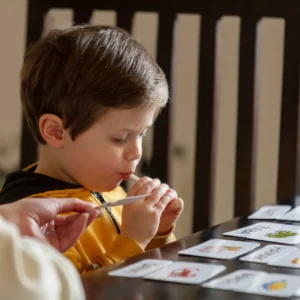
Visual aids, such as picture cards, visual schedules, and emotion charts, are also used to reinforce understanding. These tools provide structure, reduce anxiety in unfamiliar situations, and help children anticipate what’s expected of them, especially during social exchanges.
Each of these strategies is grounded in real-world success and adapted to the individual needs of the child. When used consistently and thoughtfully, they lay the groundwork for meaningful, lasting improvements in social functioning.
Social Goals We Work on at Nexo ABA Therapy
At Nexo ABA Therapy, we understand that social development looks different for every child. That’s why we create personalized social goals that reflect each child’s current strengths, challenges, and long-term potential. These goals are designed to build real-world communication and interaction skills that can improve the child’s daily experiences—both at home and in the community.
Initiating Conversations: one of the first steps in social interaction is learning how to start a conversation. Many children on the spectrum benefit from guided practice in how to greet others, ask questions, or make a simple comment. Through structured teaching and repetition, children learn not only the words to say but also the appropriate timing and context in which to say them.
Maintaining Eye Contact: while not every child will use or be comfortable with eye contact, learning to recognize and respond to visual attention cues can help improve communication. For those who are able, we work gently on increasing comfort with eye contact as a way to show engagement and connection during social exchanges.
Taking Turns and Waiting: turn-taking is a foundational social skill that applies across many activities—from games and classroom discussions to everyday conversations. Learning to wait, listen, and take turns helps children better navigate peer interactions and shared environments. We teach this through both structured play and real-life opportunities.
Understanding Personal Space and Emotions: respecting boundaries and recognizing how close is “too close” can be difficult for some children. We incorporate activities that help them learn about personal space, as well as how to interpret facial expressions, body language, and tone of voice. This supports the development of empathy and helps children respond more appropriately to others’ feelings.
Engaging in Group Play and Cooperative Tasks: participating in group activities is often one of the more complex social challenges. We break this down into manageable steps, guiding children to join in games, follow group rules, and contribute to shared tasks. Whether it’s building a tower together or taking part in a group story, these activities reinforce cooperation, flexibility, and teamwork.
Each goal is supported by a combination of structured sessions, natural environment teaching, and family involvement—ensuring that progress is both meaningful and transferable to everyday life.
How Families Can Support Social Skill Growth at Home
While therapy sessions play a key role in developing social skills, the home environment is just as important in reinforcing and expanding those abilities. As a parent or caregiver, you don’t need specialized training to make a meaningful impact—simple, everyday interactions can become valuable learning moments when approached with intention and consistency.
One of the most effective ways to support your child is by creating opportunities for social interaction in familiar settings. For example, inviting a trusted peer or sibling for a short, structured playtime can help your child practice turn-taking, sharing, or asking for help in a low-pressure environment. It’s helpful to start with brief activities that your child enjoys and to provide gentle prompts or praise when they use a target skill. Over time, these interactions can gradually become more spontaneous and less guided.
Routines at home also offer countless chances to model and encourage positive social behaviors. Mealtime conversations, setting the table together, or reading books side by side can be used to practice skills like initiating conversation, asking questions, or showing appreciation. Narrating your own thoughts and actions can help your child better understand social context—saying things like “I see you’re feeling frustrated; let’s take a break” or “I’m happy you shared with your brother, that was kind” reinforces emotional awareness and positive behavior.
Using visual supports at home—such as emotion charts, choice boards, or picture-based routines—can also strengthen your child’s understanding of social and emotional cues. These tools create predictability and give your child a way to express themselves, especially when verbal communication is still developing.
Above all, consistency and patience are key. Progress may be gradual, and there will be ups and downs along the way. Celebrating small successes, staying involved in your child’s therapy goals, and maintaining open communication with your therapy team can help ensure that the work being done in sessions carries over into real-life situations. By becoming an active participant in your child’s social development, you’re not only supporting their growth—you’re empowering them to connect with the world in their own meaningful way.
Why Choose Nexo ABA Therapy for Social Skills Support
At Nexo ABA Therapy, we know how important it is for your child to feel understood, supported, and empowered—not just in therapy, but in everyday life. That’s why our approach to social skills development goes beyond checklists and goals. We take the time to understand each child’s unique personality, communication style, and pace of learning, so we can build a plan that truly fits.
Our therapists are trained not only in evidence-based methods like role-playing, modeling, and reinforcement, but also in building trust and genuine connection with your child. We focus on small, achievable steps that lead to lasting growth, always in partnership with you and your family. Whether your child is just beginning to explore social interactions or needs support navigating more complex relationships, our team is here to guide you every step of the way.
We serve families across Broward and Miami-Dade counties, offering individualized therapy in the environment that works best for your child—whether that’s at home, in school, or in the community. With regular progress tracking, open communication, and compassionate care, we aim to make every session a stepping stone toward meaningful, real-world connections.
Helping your child build social skills is not just about learning how to say hello or take turns—it’s about opening the door to friendships, confidence, and a greater sense of belonging. Every child has the potential to connect, grow, and thrive when given the right support.
If you’re ready to explore how ABA therapy can help your child build social skills in a thoughtful, supportive environment, we’re here to help. Reach out to Nexo ABA Therapy today to learn more or schedule a consultation. Together, we can support your child’s journey—step by step.